Why Brands Need Structured Content for AI Search Engines in 2026
Optimize Ecommerce Content for AI Search, Conversational AI, and Product Discovery
Aug 12, 2026
5 mins
Learn why structured content is essential for AI search engines in 2026. Discover how AI-readable content, schema markup, semantic SEO, and conversational optimization improve ecommerce visibility and product discovery.
The way people search online is changing rapidly.
For years, ecommerce SEO focused primarily on:
- Keywords
- Backlinks
- Metadata
- Category optimisation
- Technical SEO
While these still matter, AI-powered search systems are transforming how information is discovered and presented.
Customers are increasingly using:
- Conversational AI
- AI search engines
- Voice assistants
- ChatGPT-style product discovery
- Natural language search
Instead of simply displaying links, AI systems now:
- Summarise information
- Answer questions directly
- Compare products
- Guide purchase decisions
- Recommend products conversationally
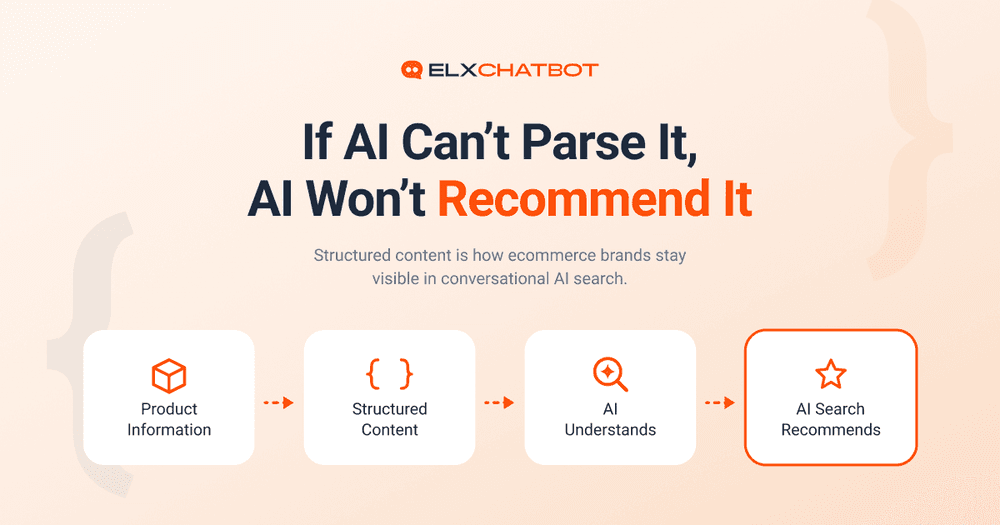
This shift is creating a new requirement for ecommerce brands: structured, AI-readable content.
What Is Structured Content?
Structured content refers to information that is organised clearly and consistently so both humans and AI systems can easily understand it.
This includes:
- Clear headings
- Semantic page structure
- FAQ sections
- Product specifications
- Schema markup
- Organised metadata
- Logically grouped information
Structured content helps AI systems interpret:
- Page meaning
- Product details
- Customer intent
- Contextual relationships
Without structure, AI systems may struggle to understand or surface content accurately.
AI Search Engines Process Information Differently
Traditional search engines focused heavily on matching keywords to pages.
AI-powered search systems work differently.
Modern AI systems attempt to:
- Understand meaning
- Interpret context
- Summarise content
- Answer questions conversationally
- Connect related information
This means AI search engines need content that is:
- Organised
- Contextual
- Easy to interpret
- Semantically clear
The better structured the content, the easier it becomes for AI systems to surface relevant information accurately.
Conversational Search Is Growing Rapidly
Customers increasingly search using natural language rather than short keywords.
For example, instead of typing:
“wireless headphones”
Users now ask:
“What are the best wireless headphones for travelling and working remotely?”
This shift towards conversational search means ecommerce content must also become more conversational and structured around customer intent.
AI systems rely heavily on well-organised content to answer these complex queries effectively.
Structured Content Improves AI Discoverability
As AI-driven search becomes more common, discoverability will increasingly depend on how well AI systems can interpret website content.
Structured content helps AI:
- Identify important information
- Understand relationships between topics
- Summarise pages accurately
- Extract relevant answers
- Recommend products more effectively
This is especially important for ecommerce websites with:
- Large product catalogues
- Technical product information
- Complex customer journeys
FAQ Content Is Becoming Increasingly Valuable
FAQ sections align naturally with conversational AI behaviour.
Customers often ask questions such as:
“How long does delivery take?”
“Can I return this item?”
“Which product is best for beginners?”
“What size should I choose?”
AI systems prefer content that answers these questions directly and clearly.
Structured FAQ content helps:
- Improve AI visibility
- Strengthen conversational search performance
- Support e-commerce AI assistants
- Improve customer experience
Product Information Needs Better Structure
Many ecommerce websites still present product data inconsistently.
Poorly structured product pages can make it difficult for AI systems to understand:
- Product features
- Specifications
- Use cases
- Compatibility
- Sizing
- Customer suitability
Structured product information helps AI assistants:
- Provide accurate recommendations
- Compare products intelligently
- Answer customer questions
- Support conversational shopping experiences
Schema Markup Helps AI Understand Ecommerce Websites
Schema markup is becoming increasingly important in AI-driven search environments.
Schema helps search engines and AI systems understand:
- Products
- FAQs
- Reviews
- Pricing
- Availability
- Articles
- Breadcrumbs
Important schema types for ecommerce include:
- Product schema
- FAQ schema
- Review schema
- Breadcrumb schema
- Article schema
These structured signals improve how AI systems interpret and display content.
Conversational Commerce Depends on Structured Data
Conversational ecommerce experiences rely heavily on structured information.
AI-powered shopping assistants need access to:
- Organised product data
- FAQs
- Inventory information
- Pricing
- Product relationships
Without structured content, conversational AI systems struggle to:
- Answer questions accurately
- Recommend products effectively
- Personalise shopping journeys
This is why structured ecommerce content is becoming increasingly important for AI-powered shopping experiences.
AI Product Discovery Is Becoming More Intent-Driven
Modern AI systems focus heavily on customer intent.
Instead of matching simple keywords, AI systems try to understand:
- Customer goals
- Preferences
- Use cases
- Product suitability
For example: A customer searching for:
“best hiking jacket for cold weather”
Requires far more contextual understanding than simply matching:
“hiking jacket”
Structured product content helps AI systems connect customer intent to suitable products more effectively.
Structured Content Supports Better Customer Experiences
Well-structured content does not only help AI systems.
It also improves the customer experience directly.
Customers benefit from:
- Clearer information
- Easier navigation
- Better product understanding
- Improved support accessibility
- Faster decision making
As AI search evolves, brands that simplify and structure information clearly will create smoother customer journeys overall.
AI Assistants Are Becoming Shopping Gateways
Increasingly, customers are using AI systems to:
- Discover products
- Compare options
- Ask buying questions
- Narrow choices
- Research purchases
This means AI assistants are becoming major discovery channels for ecommerce brands.
To remain visible within these systems, brands need content that AI can:
- Understand
- Interpret
- Summarise
- Recommend confidently
Structured content plays a major role in this visibility.
Brands Need to Think Beyond Traditional SEO
SEO is no longer only about ranking webpages.
Brands now need to optimise for:
- Conversational AI
- AI-generated answers
- Shopping assistants
- Voice search
- Conversational product discovery
This requires a broader content strategy focused on:
- Clarity
- Semantics
- Customer intent
- Conversational structure
- AI readability
AI-Friendly Ecommerce Content Should Include
To improve AI discoverability, ecommerce brands should prioritise:
Clear Product Descriptions
Explain features, benefits, use cases, and product suitability clearly.
FAQ Sections
Answer customer questions directly and naturally.
Semantic Headings
Use logical page structures with descriptive headings.
Structured Product Data
Ensure pricing, availability, and specifications are organised properly.
Conversational Language
Write content naturally instead of focusing excessively on keyword repetition.
Internal Linking
Connect related products, articles, FAQs, and support content logically.
Conversational AI and SEO Are Becoming Connected
Conversational AI systems and ecommerce SEO strategies are beginning to overlap significantly.
AI chatbots and AI search engines both rely on:
- Structured content
- Organised product information
- Conversational answers
- Semantic understanding
This means ecommerce brands should increasingly think of:
- AI chatbots
- SEO
- Customer support
- Product discovery
As interconnected parts of a broader conversational commerce strategy.
The Future of Ecommerce Discovery Is AI-Driven
As AI technology evolves, customers will increasingly expect:
- Conversational product discovery
- Personalised recommendations
- Instant answers
- Intelligent shopping assistance
Static ecommerce experiences built purely around menus and filters will become less effective over time.
Brands that structure content effectively today will be far better positioned for the future of AI-driven ecommerce discovery.
Final Thoughts
Structured content is becoming one of the most important foundations for ecommerce visibility in AI-driven search environments.
As conversational AI and AI search systems continue to grow, ecommerce brands need content that is:
- Clear
- Organised
- Contextual
- Semantically structured
- Customer-focused
The goal is no longer simply helping search engines crawl webpages.
The goal is helping AI systems understand products, answer customer questions, and guide shopping journeys accurately.
Brands that invest in structured, AI-readable content now will be significantly better prepared for the future of ecommerce search, conversational commerce, and AI-powered product discovery.
More Blogs
Explore more insights, tips, and stories from our team.