How AI Search Is Changing Ecommerce SEO in 2026
Prepare Your Online Store for the Future of AI-Driven Search
Aug 7, 2026
5 mins
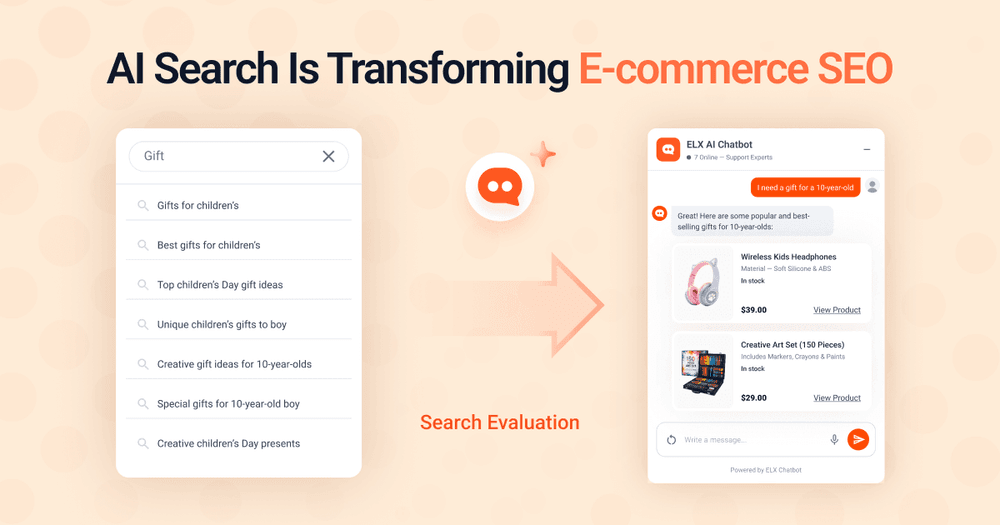
Traditional ecommerce SEO is evolving rapidly as AI-powered search experiences become more common. Customers are increasingly using conversational search tools, AI assistants, and natural language queries to discover products online. In this article, we explore how AI search is changing ecommerce SEO in 2026 and what brands should do to stay visible.
For years, ecommerce SEO focused heavily on:
- Keywords
- Category pages
- Backlinks
- Technical optimisation
- Product metadata
While these fundamentals still matter, search behaviour is now changing rapidly.
Customers are increasingly using:
- Conversational AI
- Natural language search
- AI assistants
- ChatGPT-style product discovery
- Voice-driven shopping queries
Instead of typing short keywords into search engines, shoppers are beginning to ask detailed conversational questions such as:
“What’s the best lightweight laptop for travel under £1,000?”
“Which skincare products are good for sensitive skin?”
“What are the best running shoes for flat feet?”
This shift is transforming how ecommerce brands need to think about SEO.
The future of ecommerce search is becoming more conversational, contextual, and AI-driven.
Traditional Ecommerce SEO Is No Longer Enough
Traditional SEO strategies were built around search engines matching:
- Keywords
- Titles
- Metadata
- Backlinks
Customers would typically search using short phrases such as:
“running shoes”
“black dress”
“wireless headphones”
Today, search behaviour is becoming far more conversational.
Modern AI search systems are designed to understand:
- Intent
- Context
- Meaning
- Customer goals
- Natural language queries
This changes how ecommerce websites need to structure their content.
AI Search Engines Are Becoming More Conversational
AI-powered search experiences are increasingly delivering:
- Summarised answers
- Conversational recommendations
- Product comparisons
- Guided shopping experiences
Customers are no longer simply clicking through lists of blue links.
Instead, AI systems are increasingly helping users:
- Narrow choices
- Discover products
- Compare options
- Answer buying questions
- Complete shopping decisions
This is one of the biggest shifts ecommerce SEO has seen in years.
Customers Are Using AI Before Visiting Ecommerce Websites
An increasing number of shoppers are using conversational AI tools before even visiting retailer websites.
Customers now ask AI systems things like:
“What are the best gifts for a 10-year-old?”
“Which office chair is best for back pain?”
“What’s the best waterproof hiking jacket?”
AI assistants can then:
- Summarise recommendations
- Compare products
- Explain features
- Guide customers towards decisions
This means ecommerce brands must now think about visibility beyond traditional search engines.
Ecommerce Content Needs to Become More Conversational
One of the biggest SEO changes is the growing importance of conversational content.
AI systems understand content more effectively when it:
- Answers questions clearly
- Explains topics naturally
- Provides context
- Mirrors human conversations
- Focuses on intent rather than keyword stuffing
This means ecommerce brands should increasingly create content that:
- Answers customer questions directly
- Explains product differences
- Guides purchase decisions
- Solves customer problems
- Supports conversational discovery
Product Discovery Is Becoming Intent-Driven
Traditional ecommerce SEO often focused on ranking category pages.
AI search is shifting focus towards:
- Customer intent
- Semantic understanding
- Problem solving
- Recommendation relevance
For example, ranking for:
“running shoes”
Is becoming less valuable than helping AI systems understand:
- which shoes suit marathon runners
- which products support flat feet
- which options are lightweight or waterproof
- which products suit beginners
This creates more personalised and useful search experiences.
FAQ Content Is Becoming More Important
FAQ content is increasingly valuable because it aligns naturally with conversational search behaviour. Customers ask questions in natural language.
AI systems prefer content that directly answers those questions clearly.
Ecommerce brands should therefore build FAQ content around:
- Shipping questions
- Sizing guidance
- Return policies
- Product comparisons
- Customer concerns
- Buying advice
This also aligns closely with conversational AI shopping experiences.
Structured Content Helps AI Understand Websites
AI systems rely heavily on structured and organised content.
Ecommerce websites should prioritise:
- Clear headings
- Semantic page structure
- FAQ schema
- Product schema
- Article schema
- Descriptive metadata
Structured content helps AI systems:
- Interpret meaning
- Summarise pages accurately
- Surface relevant information
- Improve visibility in AI-generated answers
AI Search Rewards Helpful Content
Search engines are increasingly prioritising:
- Expertise
- Usefulness
- Clarity
- Customer-focused information
Thin content written purely for search rankings is becoming less effective.
Brands that genuinely help customers understand products and solve problems are more likely to perform well in AI-driven search environments.
Conversational Commerce and SEO Are Becoming Connected
Conversational ecommerce and SEO are beginning to overlap.
Customers increasingly expect:
- Conversational search
- AI shopping assistance
- Guided product discovery
- Natural language support
This means ecommerce brands should think about:
- SEO
- AI chatbots
- Conversational interfaces
- Customer journeys
As part of a connected strategy rather than separate initiatives.
AI Chatbots Can Strengthen Ecommerce SEO
AI-powered ecommerce assistants can indirectly improve SEO performance by:
- Increasing engagement
- Reducing bounce rates
- Improving user experience
- Helping customers find products faster
- Improving conversion rates
The better the customer experience, the stronger overall site performance tends to become.
Additionally, conversational AI systems often generate valuable insight into:
- Customer questions
- Search intent
- Product confusion
- Buying behaviour
This data can help brands create stronger SEO content.
Voice Search and AI Search Are Closely Related
Voice search behaviour is also influencing ecommerce SEO.
People naturally speak differently than they type.
Voice and conversational AI queries tend to be:
- Longer
- More specific
- Intent-driven
- Question-based
For example: Instead of:
“gaming headset”
Users may ask:
“What’s the best gaming headset for PS5 under £100?”
Ecommerce SEO strategies need to adapt to these more natural language search patterns.
Brands Need to Optimise Beyond Google
Search discovery is becoming more fragmented.
Customers now discover products through:
- ChatGPT
- AI assistants
- TikTok
- YouTube
- Social commerce
- Conversational shopping tools
This means ecommerce brands should focus on building:
- High-quality content
- Structured information
- Conversational experiences
- Authoritative product guidance
Rather than relying solely on traditional search rankings.
What Ecommerce Brands Should Prioritise in 2026
As AI search evolves, ecommerce brands should focus on:
Conversational Content
Write naturally and answer customer questions directly.
Structured Data
Use schema markup and semantic page structures.
Helpful Product Guidance
Focus on customer intent rather than just keywords.
Conversational AI Experiences
Integrate AI chatbots and conversational shopping tools.
FAQ Optimisation
Create detailed FAQ content based on real customer questions.
AI-Friendly Product Information
Ensure product details are accurate, organised, and easy for AI systems to interpret.
The Future of Ecommerce SEO Is More Human
Ironically, as AI search becomes more advanced, successful SEO content is becoming more human-focused.
The brands most likely to succeed are those that:
- Understand customer intent deeply
- Create genuinely useful content
- Simplify shopping experiences
- Provide conversational guidance
- Structure information clearly
AI systems are increasingly rewarding content that helps users rather than content designed purely for rankings.
Final Thoughts
AI search is transforming ecommerce SEO faster than many businesses realise.
Customers are increasingly using conversational and AI-driven discovery tools to:
- Research products
- Compare options
- Ask buying questions
- Make purchasing decisions
For ecommerce brands, this means SEO strategies must evolve beyond traditional keyword optimisation.
The future of ecommerce visibility will increasingly depend on:
- Conversational content
- Structured information
- Customer-focused experiences
- AI-readable product data
- Conversational commerce strategies
Brands that adapt early to AI-driven search behaviour will be far better positioned to remain visible, competitive, and discoverable in the next generation of ecommerce search experiences.
More Blogs
Explore more insights, tips, and stories from our team.