How AI Chatbots Help Reduce Cart Abandonment in Ecommerce
Reduce cart abandonment with AI-powered sales assistants and conversational shopping
Jul 30, 2026
5 mins
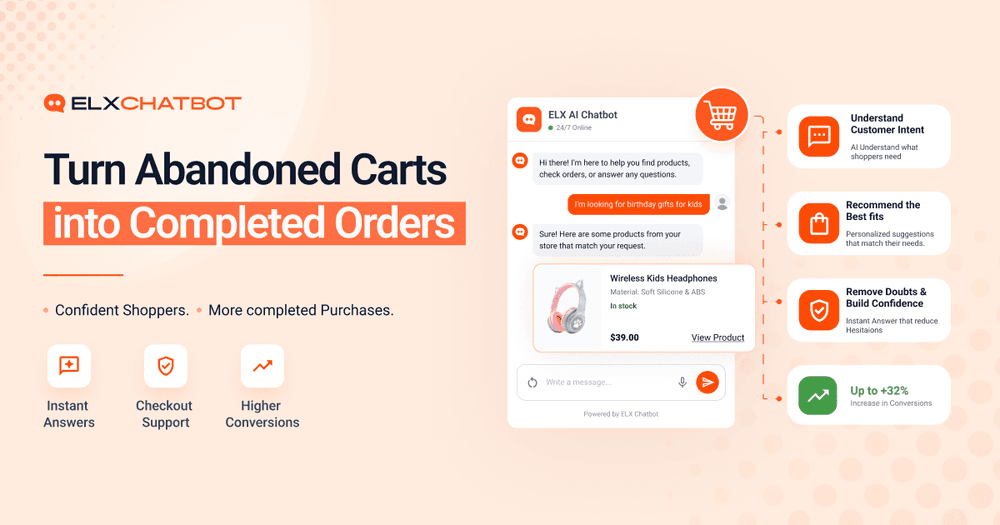
Cart abandonment remains one of the biggest challenges in ecommerce. Many customers leave websites before completing their purchase due to unanswered questions, uncertainty, or friction during the buying process. In this article, we explore how AI chatbots and AI sales assistants help ecommerce brands reduce cart abandonment and improve conversion rates through real-time conversational support.
Cart abandonment is one of the biggest frustrations for ecommerce businesses.
A customer adds products to their basket, reaches the checkout stage, and then leaves without completing the purchase.
For many online retailers, this happens far too often.
While ecommerce brands invest heavily in:
- Marketing
- Paid advertising
- SEO
- Social campaigns
- Product photography
A significant percentage of potential customers still leave before converting.
The challenge is not always the product itself.
In many cases, customers abandon their carts because they encounter uncertainty, hesitation, or friction during the buying journey.
This is where AI chatbots are becoming increasingly valuable.
Modern AI-powered ecommerce assistants help businesses answer customer concerns instantly, guide shoppers towards decisions, and create smoother checkout experiences that reduce abandonment rates.
Why Customers Abandon Their Carts
There are many reasons why shoppers leave without completing a purchase.
Some of the most common include:
- Unexpected delivery costs
- Uncertainty about delivery times
- Confusion about sizing
- Unanswered product questions
- Complicated checkout processes
- Lack of trust or reassurance
- Inability to compare products quickly
- Distraction during the buying process
Even small moments of hesitation can prevent a customer from converting.
When support is unavailable or difficult to access, customers often leave rather than continue searching for answers.
See More: How AI Chatbots Increase Conversion Rates on BigCommerce Stores in 2026
AI Chatbots Provide Instant Answers
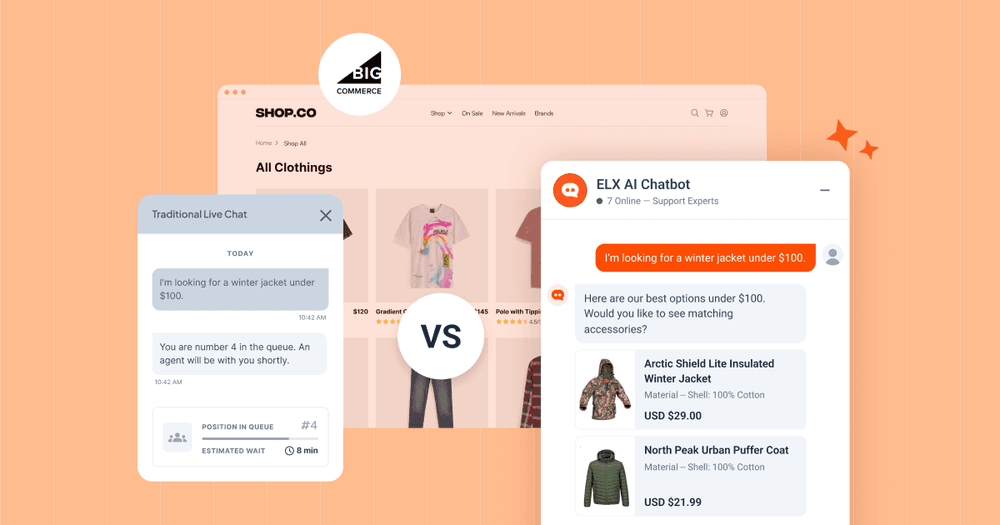
One of the biggest advantages of AI chatbots is speed.
Customers increasingly expect immediate responses while shopping online.
If a customer has a question such as:
“Will this arrive before Friday?”
“Does this fit true to size?”
“Can I return this item?”
“Do you ship internationally?”
Waiting hours for an email response is no longer acceptable for many shoppers.
AI chatbots provide instant assistance directly within the shopping journey.
This helps customers move forward confidently without interrupting the buying process.
Reducing Friction During Checkout
Checkout friction is one of the leading causes of cart abandonment.
Customers often leave because:
- Information is unclear
- Support is difficult to access
- They cannot quickly find reassurance
AI-powered shopping assistants reduce friction by:
- Answering questions in real time
- Providing delivery information instantly
- Clarifying return policies
- Assisting with payment concerns
- Guiding customers through the checkout process
This creates a smoother and more reassuring experience.
AI Chatbots Improve Product Confidence
Many shoppers hesitate before purchasing because they are unsure whether a product is right for them.
This is especially common in industries such as:
- Fashion
- Beauty
- Electronics
- Furniture
- Health products
Customers may worry about:
- Sizing
- Compatibility
- Colour choices
- Product suitability
- Technical specifications
AI chatbots help reduce uncertainty by providing:
- Personalised recommendations
- Product comparisons
- Instant clarification
- Conversational guidance
The more confident a customer feels, the more likely they are to complete the purchase.
Personalised Recommendations Help Customers Decide Faster
Too many product choices can overwhelm shoppers.
AI chatbots improve the buying experience by helping customers narrow down options based on:
- Preferences
- Budget
- Use case
- Style
- Product requirements
For example, a customer could ask:
“I need running shoes for long-distance road running under £120.”
The AI assistant can:
- Ask follow-up questions
- Refine suggestions
- Explain differences between products
- Recommend the most suitable option
This creates a far more personalised and efficient shopping experience.
Conversational Shopping Keeps Customers Engaged
Traditional ecommerce experiences often rely heavily on:
- Menus
- Filters
- Category pages
- Search bars
Conversational AI changes this completely.
Instead of manually browsing through products, customers can simply explain what they need naturally. This creates a more engaging and interactive shopping journey. Customers who remain engaged throughout the buying process are less likely to abandon their carts.
AI Chatbots Help Recover Hesitating Customers
Modern AI systems can identify signs of hesitation during the customer journey.
For example:
- Long periods of inactivity
- Repeated product page visits
- Checkout delays
- Exit intent behaviour
AI chatbots can then proactively offer assistance by:
- Asking if the customer needs help
- Recommending alternatives
- Clarifying concerns
- Answering common objections
This proactive support can help recover sales that might otherwise be lost.
Real-Time Order and Delivery Information Matters
Delivery concerns are one of the biggest reasons customers abandon purchases.
Shoppers increasingly expect:
- Transparent delivery times
- Real-time shipping information
- Accurate order updates
AI chatbots integrated with ecommerce systems can instantly provide:
- Shipping estimates
- Stock availability
- Delivery updates
- Order tracking information
This reduces uncertainty and improves trust during the checkout process.
AI Chatbots Improve Mobile Shopping Experiences
Mobile ecommerce continues to grow rapidly, but mobile users often face more friction than desktop shoppers.
Small screens can make:
- Navigation harder
- Product discovery slower
- Support access less visible
AI chatbots help simplify mobile shopping by allowing customers to ask questions conversationally instead of navigating complex interfaces.
This creates smoother mobile buying experiences and helps reduce abandonment on mobile devices.
Multilingual Support Helps Global Ecommerce
International customers may abandon carts simply because support is unavailable in their preferred language.
AI-powered chatbots can:
- Automatically detect languages
- Communicate naturally across regions
- Answer questions instantly
- Improve trust for international shoppers
This is particularly valuable for ecommerce brands operating globally.
Multilingual Chatbots: Expanding Global Reach
AI Chatbots Support Human Customer Service Teams
AI chatbots are not designed to replace human support entirely.
Instead, they help support teams operate more efficiently by handling:
- Repetitive questions
- Delivery queries
- Product recommendations
- Checkout assistance
More complex or sensitive issues can still be escalated to human agents when needed.
This hybrid support model creates better customer experiences while reducing operational pressure.
AI Chatbots Provide Valuable Customer Insights
AI conversations also provide valuable data that ecommerce businesses can use to improve performance.
Brands can identify:
- Common customer concerns
- Checkout friction points
- Popular product questions
- Reasons for hesitation
- Support bottlenecks
This insight helps businesses optimise:
- Product pages
- Checkout flows
- FAQs
- Shipping communication
- Customer journeys
What Ecommerce Brands Should Look For in AI Chatbots
As AI shopping technology evolves, businesses should prioritise chatbot platforms that offer:
Intelligent Product Recommendations
The AI should understand products and customer intent
Ecommerce Platform Integration
Integration with Shopify, Magento, WooCommerce, and BigCommerce is essential.
Real-Time Support
Customers expect instant answers throughout the buying process.
Human Handover
Support teams should be able to join conversations when needed.
Analytics and Insights
Understanding customer behaviour is critical for conversion optimisation.
Multilingual Support
Global ecommerce requires communication across multiple languages.
Conversational Commerce Is Changing Ecommerce
The ecommerce industry is moving towards more conversational and personalised shopping experiences.
Customers increasingly expect websites to:
- Guide them naturally
- Answer questions instantly
- Provide intelligent recommendations
- Simplify decision-making.
AI chatbots are becoming central to this transformation.
Instead of acting purely as support tools, they are becoming:
- AI sales assistants
- Conversion optimisation tools
- Digital shopping advisors
Final Thoughts
Reducing cart abandonment is not only about improving checkout pages or offering discounts.
It is about reducing uncertainty, improving confidence, and helping customers complete their buying journey more easily.
AI chatbots help ecommerce brands achieve this by:
- Providing instant support
- Improving product discovery
- Personalising shopping experiences
- Reducing friction
- Increasing customer confidence
As conversational ecommerce continues to grow in 2026, AI-powered shopping assistants are likely to become one of the most important tools for improving ecommerce conversion rates and reducing lost sales.
More Blogs
Explore more insights, tips, and stories from our team.