Why Ecommerce Websites Are Becoming Conversational Experiences in 2026
How AI Chatbots, AI Agents, and Personalised Shopping Are Transforming Online Retail
Jul 30, 2026
5 mins
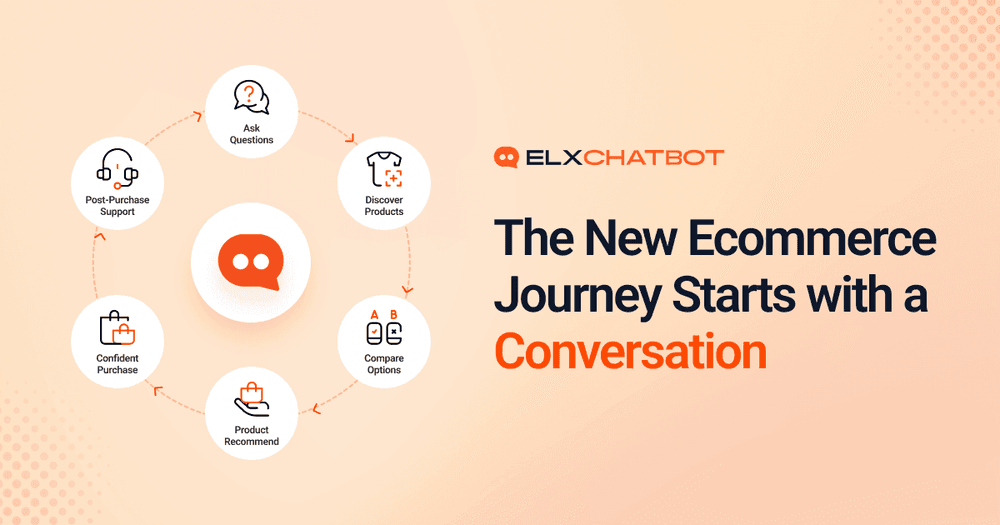
Traditional ecommerce websites are rapidly evolving. Customers no longer want static shopping journeys filled with endless menus and filters. In 2026, conversational ecommerce is changing how people discover products, ask questions, and complete purchases online. In this article, we explore why ecommerce websites are becoming conversational experiences and how AI is reshaping online shopping.
For years, ecommerce websites followed a familiar structure.
Customers would:
- browse categories
- use filters
- search for products
- compare options manually
- contact support if they needed help
While this model worked, it often created friction.
Customers had to do most of the work themselves.
In 2026, ecommerce is shifting towards something very different.
Instead of expecting users to navigate complex websites alone, brands are now building conversational shopping experiences powered by AI.
The goal is simple: Make online shopping feel more natural, personalised, and interactive.
What Is Conversational Ecommerce?
Conversational ecommerce refers to online shopping experiences where customers interact with a business through natural conversations instead of relying solely on traditional navigation.
This can include:
- AI chatbots
- AI agents
- Live messaging
- Voice assistants
- Personalised shopping assistants
- Conversational product recommendations
Rather than searching through endless menus, customers can simply ask questions like:
- “Which running shoes are best for flat feet?”
- “Do you have this jacket in blue?”
- “I need a birthday gift for a 10-year-old.”
- “What’s the difference between these two products?”
AI systems can then guide the customer through the shopping journey in real time.
Why Traditional Ecommerce Journeys Create Friction
Many ecommerce websites still rely heavily on:
- Complicated navigation
- Large menus
- Endless filters
- Keyword search
- Static product pages
This often creates problems for customers who:
- are unsure what they need
- don’t know the correct product terminology
- feel overwhelmed by too many choices
- want reassurance before purchasing
In many cases, customers leave simply because they cannot quickly find the information they need.
This is one of the biggest reasons conversational ecommerce is growing so quickly.
AI Chatbots vs AI Agents: What Ecommerce Brands Need to Know in 2026
Customers Expect Instant Answers
Consumer behaviour has changed significantly over the last few years.
Modern shoppers expect:
- instant support
- fast recommendations
- personalised experiences
- real-time responses
- minimal effort
People have become used to conversational interactions through:
- messaging apps
- AI assistants
- social platforms
- voice search
- tools like ChatGPT
As a result, expectations for ecommerce websites have also changed.
Customers increasingly expect websites to communicate with them instead of simply displaying products.
AI Is Changing the Ecommerce Experience
AI-powered conversational systems are helping brands create much more dynamic shopping journeys.
Instead of static browsing experiences, ecommerce websites can now:
- Answer customer questions instantly
- Provide intelligent product recommendations
- Guide users towards suitable products
- Personalise conversations
- Assist with decision making
- Reduce purchase hesitation
This transforms the website from a digital catalogue into an interactive shopping assistant.
Product Discovery Is Becoming Conversational
One of the biggest benefits of conversational ecommerce is improved product discovery. Traditional ecommerce search often depends on exact keywords.
But customers do not always know:
- what products are called
- which category to search in
- what specifications matter
- which products best fit their needs
Conversational AI solves this by allowing customers to explain what they want naturally.
For example:
“I need a lightweight waterproof jacket for hiking in cold weather.”
An AI-powered ecommerce assistant can:
- Understand intent
- Ask follow-up questions
- Narrow down suitable products
- Explain differences between options
- Recommend the best match
This creates a far more intuitive shopping experience.
Conversational Ecommerce Helps Increase Conversions
Many ecommerce stores lose sales because customers cannot get answers quickly enough.
Common issues include:
- Sizing concerns
- Shipping questions
- Uncertainty about product suitability
- Cconfusion between similar products
- Lack of confidence before checkout
- Conversational AI helps address these concerns immediately.
When customers receive instant answers during the buying journey, they are more likely to complete their purchase.
This can help:
- Reduce cart abandonment
- Improve conversion rates
- Increase average order value
- Improve customer satisfaction
Ecommerce Support Is Becoming Proactive
Traditional customer support is usually reactive. A customer encounters a problem and then contacts support.
Conversational AI allows support to become proactive. For example, AI systems can:
- Identify hesitation during checkout
- Recommend help at the right moment
- Suggest alternative products
- Guide customers through common concerns
- Offer instant order updates
This creates smoother customer experiences while reducing pressure on support teams.
AI Shopping Assistants Are Becoming the New Store Experience
Physical retail stores have always had one major advantage over ecommerce: human interaction.
In-store staff can:
- Answer questions
- Recommend products
- Guide customers
- Provide reassurance
Conversational ecommerce brings many of these benefits into the online shopping experience.
AI shopping assistants are becoming the digital equivalent of knowledgeable store associates.
This is especially important for industries such as:
- Fashion
- Beauty
- Electronics
- Furniture
- Luxury retail
- Health and wellness
Where customers often require additional guidance before making a purchase.
Personalisation Is Driving Conversational Commerce
Modern shoppers expect personalised experiences.
Conversational AI helps ecommerce brands deliver this by:
- Remembering customer preferences
- Understanding shopping intent
- Adapting recommendations
- Personalising responses
- Learning from interactions over time
This level of personalisation helps customers feel understood rather than treated as anonymous visitors.
Conversational Ecommerce Supports Global Shopping
As ecommerce brands expand internationally, conversational AI also helps improve multilingual support.
AI-powered systems can:
- Automatically detect languages
- Communicate naturally across multiple regions
- Answer support questions instantly
- Reduce language barriers
This allows businesses to offer better customer experiences without building large multilingual support teams.
The Role of Human Support Still Matters
Conversational AI is not about removing human interaction entirely.
The best ecommerce experiences combine:
- AI automation
- Intelligent assistance
- Seamless human takeover when needed
Customers still value human support for more complex situations.
The difference is that AI can now handle routine conversations efficiently while human agents focus on higher-value interactions.
What Ecommerce Brands Should Focus On
As conversational ecommerce continues to grow, businesses should prioritise solutions that:
- Integrate with ecommerce platforms
- Understand product data
- Support real-time conversations
- Provide intelligent recommendations
- Offer multilingual support
- Allow human handover
- Provide analytics and customer insights
The most successful brands will be those that make shopping easier, faster, and more personalised.
The Future of Ecommerce Is Conversational
The way customers interact with ecommerce websites is changing rapidly. Static shopping experiences are gradually being replaced by conversational journeys powered by AI.
In the near future, customers may no longer rely heavily on:
- Complex navigation
- Endless filters
- Traditional site search
Instead, they will increasingly expect websites to:
- Understand intent
- Guide decisions
- Answer questions instantly
- Personalise recommendations
- Assist throughout the entire customer journey
Conversational ecommerce is not simply a trend.
It is becoming the new standard for online shopping experiences.
Final Thoughts
Ecommerce brands are under growing pressure to improve customer experiences while managing increasing support demands.
Conversational AI helps bridge this gap by creating shopping experiences that feel more interactive, intelligent, and personalised.
As AI technology continues to evolve, ecommerce websites will increasingly behave less like static stores and more like digital shopping assistants.
Brands that invest in conversational ecommerce now will be better positioned to:
- Improve customer satisfaction
- Increase conversions
- Reduce support workloads
- Strengthen long-term customer relationships
The future of ecommerce is becoming more conversational, more personalised, and far more intelligent than traditional online shopping experiences ever were.
More Blogs
Explore more insights, tips, and stories from our team.