From Queries to Conversions: How Chatbots Turn Customer Conversations into Sales
AI chatbots turn conversations into instant sales.
Jul 30, 2026
5 mins
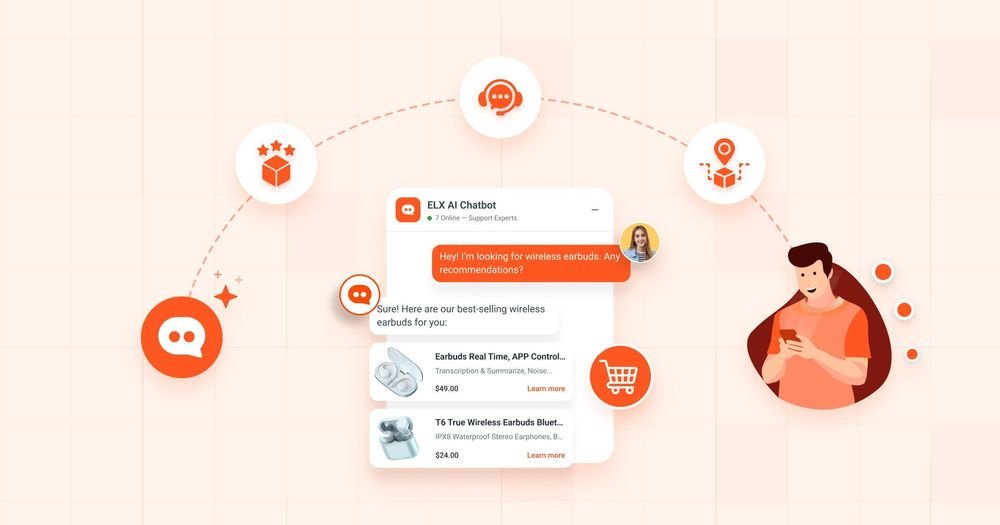
Learn how AI chatbots like ELX Chatbot increase conversions, reduce cart abandonment, and personalize customer experiences for eCommerce brands.
Online shopping is built on moments. A customer visits your store, explores a few products, and hesitates before buying. That hesitation, whether it lasts seconds or minutes, can make or break a sale.
For years, eCommerce businesses have tried to close this gap using email reminders, discount popups, and retargeting ads. But today, there is a smarter and more personal approach: AI chatbots that engage customers in real time, answer questions instantly, and guide them toward the right purchase.
According to a study by Glassix, websites that use chatbots experience a 23% higher conversion rate than those without one. This shift from passive website browsing to active, two-way conversation is redefining how online businesses sell.
In this article, we will explore how conversational chatbots such as ELX Chatbot are helping eCommerce brands boost sales, personalize experiences, and build stronger customer relationships.
1. The Modern Buyer Journey Has Changed
Today’s consumers are independent. They research, compare, and evaluate before buying. They expect instant information and assistance without filling out long forms or waiting in a queue.
Yet many online stores still operate like static catalogues. Customers have questions about product details, delivery options, or compatibility but often have to search multiple pages to find the answers.
This is where AI-powered chatbots fill the gap. By combining automation with natural conversation, they offer a guided experience that mirrors in-store assistance. When a customer types, “Do you have this in size M?” or “What’s the best product for dry skin?”, the chatbot can provide real answers immediately.
That interaction transforms a passive visitor into an engaged shopper. And engagement is the first step toward conversion.
2. Turning Conversations Into Conversions
At its core, a chatbot’s job is to keep the conversation moving toward a goal. Whether the goal is a purchase, a newsletter signup, or a product recommendation, each message has value.
ELX Chatbot stands out by using intelligent conversation flows and real-time data to guide customers through the buying process. They can:
- Recommend products based on preferences, previous browsing history, or specific keywords.
- Answer objections such as questions about pricing, returns, or availability.
- Recover potential drop-offs by re-engaging visitors who are about to leave.
- Simplify checkout by sharing direct product links or discount codes.
The key advantage is speed. When customers receive instant answers, they are far more likely to complete the purchase instead of abandoning the site in frustration.
3. Personalized Product Recommendations That Feel Natural
The most effective sales conversations feel personal. In a physical store, a great sales associate listens to the customer, understands their needs, and suggests the right product.
AI chatbots now replicate that same experience online.
By analysing browsing behaviour and product data, a chatbot can tailor its suggestions to match what the customer actually wants. For example:
- A shopper looking for skincare may be asked, “Is your skin type oily, dry, or sensitive?”
- Based on their answer, the chatbot can show targeted recommendations.
- If the customer adds something to their cart, the chatbot can suggest a complementary product.
This level of personalization not only improves user experience but also increases average order value (AOV). According to research from Drift, businesses using AI chatbots report that customers are more likely to purchase additional products after engaging in a chatbot conversation.
With ELX Chatbot, this happens automatically. It learns from your store’s catalogue and adapts to customer preferences in real time.
4. Reducing Cart Abandonment Through Instant Support
Cart abandonment is one of the biggest challenges in eCommerce. Studies show that nearly 70% of online shopping carts are abandoned, often because customers have unanswered questions or doubts.
Common reasons include:
- Confusion about shipping costs
- Uncertainty about returns or exchanges
- Needing reassurance about product fit or specifications
A chatbot addresses all of these issues instantly. When a customer hesitates, the chatbot can step in to help with messages like:
- “Would you like to see our return policy?”
- “Shipping is free on orders over $50.”
- “We have this product in your selected size.”
By resolving hesitation in the moment, AI chatbots prevent lost sales and turn uncertainty into confidence.
ELX Chatbot’s real-time engagement is particularly effective here, it detects when a user is idle on the checkout page and proactively offers help, ensuring fewer abandoned carts and more completed purchases.
5. Building Long-Term Customer Relationships
Chatbots are not just about quick wins. They also help brands build stronger relationships with customers over time.
Each interaction provides valuable insights, what people are asking, what products they are most interested in, and where they hesitate. These insights can be used to improve both marketing and customer experience strategies.
Moreover, customers who have a smooth, helpful experience during their first visit are more likely to return. Consistency and responsiveness are key drivers of loyalty, and a chatbot ensures that every visitor receives the same level of service every time.
ELX Chatbot strengthens this relationship by providing a human-like tone and adapting its responses to match your brand’s personality, ensuring that automation still feels personal.
6. How to Make Chatbots an Effective Sales Channel
To unlock the full conversion potential of your chatbot, implementation and configuration matter. Here are a few essential best practices:
Map your customer journey
Identify the most common drop-off points and pain areas such as pricing questions, product comparisons, or checkout steps and design your chatbot to address them proactively.
Integrate your product catalogue
Ensure the chatbot is connected to your store’s inventory and pricing data. ELX Chatbot automatically updates product information so recommendations are always accurate.
Keep conversations clear and concise
Avoid long, scripted dialogues. Chatbots should respond naturally and guide customers toward quick actions, such as adding a product to their cart or viewing a related item.
Combine automation with human backup
Even the best chatbots benefit from human support when necessary. ELX Chatbot allows smooth handoffs to live agents for complex questions, maintaining a consistent and helpful experience.
7. Chatbots as the Future of Conversational Commerce
The role of chatbots in online retail is evolving. They are no longer just digital assistants they are becoming integral sales tools that help brands grow revenue and customer engagement simultaneously.
By providing immediate answers, personalized recommendations, and seamless guidance, a chatbot can turn more conversations into conversions and elevate the customer experience.
ELX Chatbot helps eCommerce brands achieve this balance by combining advanced AI with effortless integration and full customization. The result is a powerful, conversational sales assistant that drives growth day and night.
More Blogs
Explore more insights, tips, and stories from our team.