Chatbot Analytics & Optimization: How to Continuously Improve Conversation Performance
Using Chatbot Analytics for Performance and Optimization
Dec 18, 2025
5 mins
Understanding chatbot analytics is key to long-term success. Learn how to measure, interpret, and optimize chatbot performance to improve customer engagement, conversions, and satisfaction.
Launching a chatbot is an important first step, but the real value comes from what happens next: analyzing and optimizing how it performs over time.
Just like marketing campaigns or eCommerce sales funnels, chatbots should never be “set and forget.” To deliver consistent results, they require regular monitoring, data-driven insights, and continuous improvement.
HubSpot advocates for the use of AI chatbots and that businesses using AI-powered chatbots see up to a 67% improvement in lead conversion when they regularly review and optimize performance.
In this article, we explore how analytics help brands fine-tune chatbot conversations, what metrics to track, and how ELX Chatbot gives businesses the tools they need to optimize engagement and satisfaction.
1. Why Chatbot Analytics Matter
Chatbots are powerful tools but only if they evolve. Without analytics, it’s impossible to know what’s working, what’s confusing users, or what opportunities are being missed.
Analytics turn chatbot interactions into actionable insights. They reveal:
- How customers engage with your chatbot.
- Which questions are asked most frequently.
- Where conversations drop off or end unsuccessfully.
- Which responses lead to conversions or resolutions.
This information helps businesses continuously refine their chatbot, improving both efficiency and customer experience.
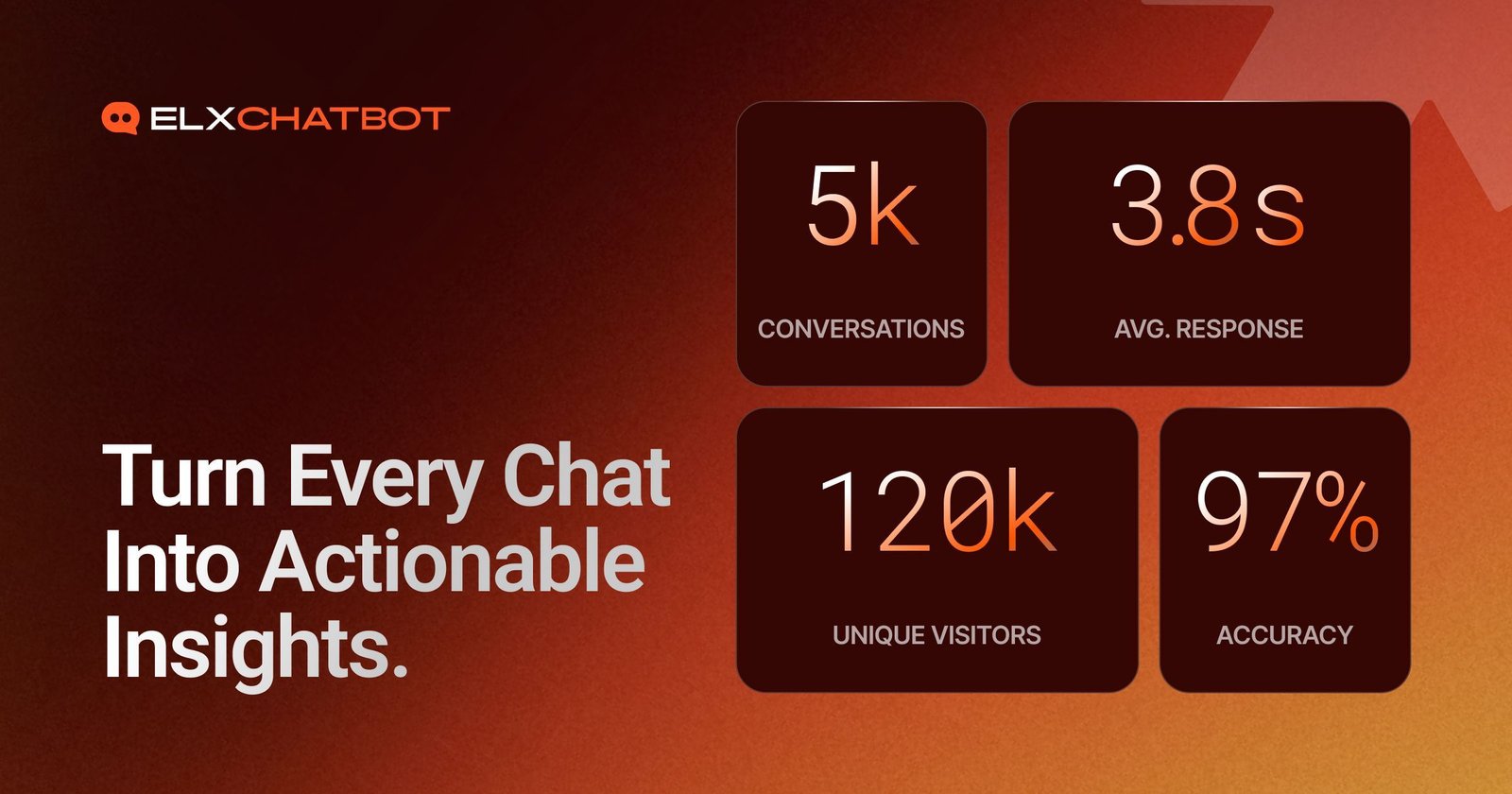
ELX Chatbot includes a detailed analytics dashboard that tracks all key metrics, conversations, messages, link clicks, order-related queries, and human handoffs, making performance optimization straightforward and data-driven.
1. The Key Metrics Every Business Should Track
Not all chatbot data is equally useful. To optimize effectively, focus on the metrics that reflect engagement, satisfaction, and conversion quality.
Total Chat Sessions
Measures the overall usage of your chatbot. A growing number of sessions often indicates healthy engagement and visibility.
Engagement Rate
Tracks how many visitors interact with the chatbot compared to total website visitors. A strong rate suggests your chatbot is visible and inviting.
Resolution Rate
Shows how many queries are successfully answered without human assistance. A high resolution rate means your chatbot is handling tasks efficiently.
Escalation Rate
Indicates how often conversations are transferred to human agents. Some escalation is good, it means the chatbot is identifying complex queries correctly, but a high rate may signal a need for better training.
Customer Satisfaction (CSAT)
Measures how users feel about their chatbot experience. Many chatbots collect this through quick feedback prompts like “Was this helpful?” at the end of a conversation.
Conversion Rate
Tracks how many chatbot interactions result in a desired action, such as a purchase, demo booking, or email signup.
By focusing on these metrics, businesses gain a complete view of chatbot performance across both support and sales functions.
2.How Analytics Drive Chatbot Improvement
The most successful chatbots evolve through data-informed optimization. Each data point helps identify how to make conversations clearer, faster, and more effective.
Here are some ways analytics fuel ongoing improvement:
- Identifying common questions: Use frequency data to update FAQs and prebuilt responses.
- Reducing confusion: Review messages that lead to repeated queries or drop-offs and adjust wording for clarity.
- Improving flow design: If customers repeatedly get stuck, restructure the conversation path to be more intuitive.
- Enhancing personalization: Track customer intent trends to tailor recommendations more effectively.
ELX Chatbot automates much of this process. It categorizes chat types (FAQ, product, order, or general inquiry), surfaces popular topics, and shows where conversations could be improved, helping businesses optimize faster and more efficiently.
3.Turning Data into Action: A Continuous Optimization Framework
To maximize chatbot performance, treat analytics as part of a continuous improvement cycle. A simple framework looks like this:
- Collect data – Gather key metrics from chatbot analytics and customer feedback.
- Analyse trends – Identify recurring issues, high-performing responses, or confusing interactions.
- Refine content – Update chatbot replies, tone, or logic based on insights.
- Test and iterate – A/B test variations of messages, call-to-actions, or flow paths.
- Review results – Compare new performance data with previous metrics to measure improvement.
Following this cycle ensures that your chatbot keeps learning and adapting, delivering stronger results month after month.
4. A/B Testing: The Secret to Higher Chatbot Performance
A/B testing is a powerful optimization tool for chatbots. By comparing two versions of a message or conversation path, businesses can discover what works best for their audience.
For example, you can test:
- Different greeting messages (“How can I help today?” vs. “Looking for something specific?”).
- Varying tones (“Hi there!” vs. “Welcome back.”).
- Call-to-action phrases (“Shop now” vs. “See product details”).
- Even small wording changes can have a measurable impact on engagement and conversions.
ELX Chatbot allows teams to experiment easily with messaging variations and analyse which version produces higher satisfaction and conversion rates.
5. Using Insights to Train Your Chatbot for Better Accuracy
As chatbots handle more interactions, they naturally encounter new questions, expressions, and edge cases.
By reviewing chat transcripts, businesses can train their chatbot to understand more variations of the same intent. This reduces fallback responses and ensures users always get a relevant answer.
ELX Chatbot makes this process simple by letting businesses view transcripts directly within the analytics portal, tag intents, and update knowledge bases in real time. The result is continuous learning that leads to more accurate, more natural conversations.
6. Aligning Chatbot KPIs with Business Goals
While chatbot analytics focus on engagement and satisfaction, they should ultimately align with business objectives.
For eCommerce brands, this may include:
- Reducing support costs by automating common queries.
- Increasing sales conversions through product recommendations.
- Capturing leads through conversational engagement.
- Improving retention by delivering faster post-purchase support.
ELX Chatbot’s insights are designed to connect chatbot metrics directly to business outcomes, helping teams see how automation impacts growth and efficiency.
7. The Long-Term Value of Chatbot Optimization
Chatbots that are regularly optimized consistently outperform those that are not. Over time, they deliver higher engagement, faster response times, and greater customer satisfaction.
Optimization is not just a maintenance task, it’s a growth strategy.
By embracing data-driven improvement, your chatbot becomes smarter, more aligned with customer needs, and more valuable to your business.
ELX Chatbot makes this easy with built-in analytics, feedback tracking, and automated insight generation, allowing your team to focus on strategic refinement rather than manual reporting.
Excited to learn more about ELX Chatbot? Book a Demo or Start Free Trial
More Blogs
Explore more insights, tips, and stories from our team.