How to Add an AI Chatbot to a Shopify Store in 2026
A Complete Guide to Adding an AI Chatbot to Your Shopify Store
Sep 21, 2026
5 mins
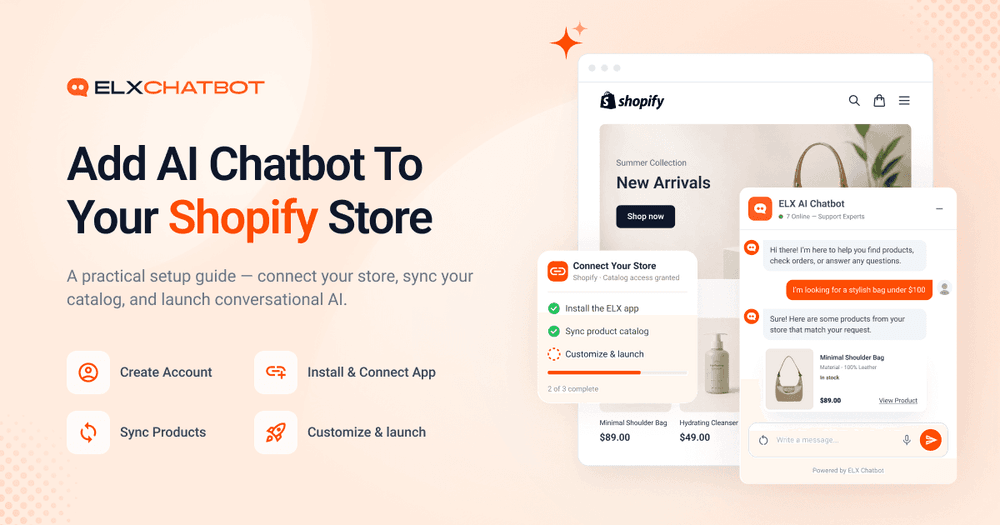
AI chatbots are rapidly becoming essential for Shopify stores looking to improve customer experience, automate support, and increase conversions. In this guide, we explain how to add an AI chatbot to a Shopify store, what features ecommerce brands should prioritise, and how conversational AI is changing online shopping in 2026.
AI chatbots are becoming an increasingly practical way for Shopify stores to improve customer experience, automate support, assist product discovery, and support shoppers throughout the buying journey.
In this guide, we explain how to add an AI chatbot to a Shopify store, what features ecommerce brands should prioritize, how to prepare product and support information, and how to measure whether the chatbot is actually helping the business.
Shopify's 2026 commerce data shows why this matters beyond customer support: AI-driven traffic to Shopify stores grew 8× year over year in Q1 2026, while orders originating from AI-powered searches increased nearly 13×. That makes AI increasingly relevant not only to support, but also to product discovery and ecommerce conversion.
Source: Shopify: Agentic Commerce on Shopify: How It Works
Modern shoppers expect:
- Instant responses
- Personalised product recommendations
- Fast support
- Real-time order updates
- Frictionless shopping experiences
For Shopify store owners, meeting these expectations manually can become difficult as traffic and support requests grow.
This is one of the biggest reasons AI chatbots are becoming increasingly popular in ecommerce.
Today’s AI-powered assistants can:
- Answer customer questions
- Recommend products
- Guide customers through purchases
- Automate support tasks
- Reduce cart abandonment
- Improve conversion rates
In this guide, we explain how to add an AI chatbot to a Shopify store and what ecommerce brands should consider when choosing the right solution.
Why Shopify Stores Are Using AI Chatbots
AI chatbots are no longer just support tools.
Modern ecommerce AI assistants help businesses:
- Improve customer experience
- Increase conversions
- Automate repetitive support tasks
- Personalise shopping journeys
- Reduce customer friction
For many Shopify brands, conversational AI is becoming a core part of the ecommerce experience.
Instead of relying solely on:
- Menus
- Filters
- Search bars
- Static product pages
AI assistants allow customers to interact with stores conversationally.
This creates more engaging and personalised shopping experiences.
What an AI Chatbot Can Do for a Shopify Store
The capabilities of ecommerce AI chatbots have evolved significantly.
Modern AI assistants can help with:
Product Recommendations
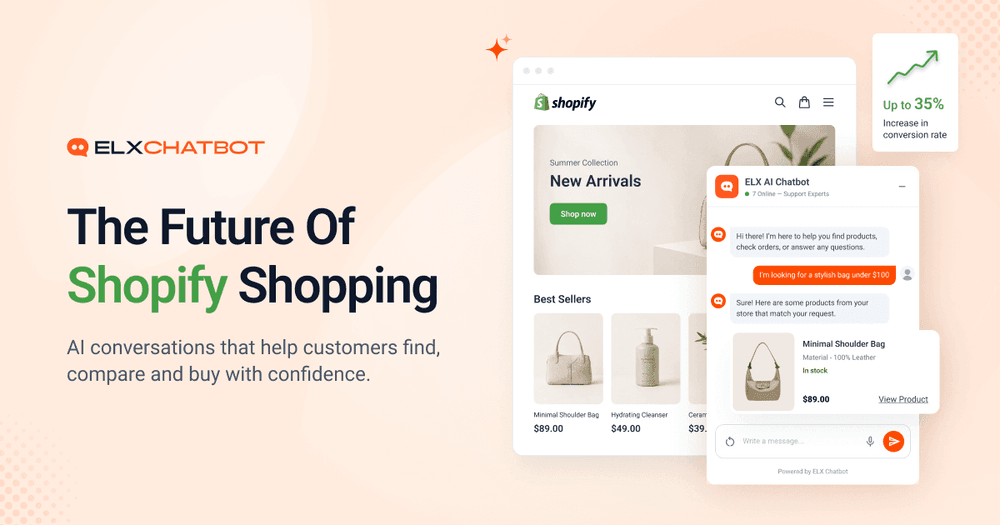
AI can guide customers towards suitable products based on preferences, needs, and budgets.
Customer Support Automation
The chatbot can answer common support questions instantly.
Real-Time Order Tracking
Customers can retrieve order updates without contacting support teams manually.
Conversational Product Discovery
AI helps shoppers find products naturally through conversation.
Cart Abandonment Reduction
The chatbot can assist hesitant customers before they leave the website.
Multilingual Support
AI can automatically communicate with international customers in their preferred language.
Step 1: Choose the Right AI Chatbot Platform
The first step is selecting an AI chatbot platform designed specifically for ecommerce.
Not all chatbot systems are built for Shopify stores.
Some platforms focus mainly on:
- Live chat
- Support ticketing
- Generic customer service workflows
Ecommerce brands should prioritise platforms that understand:
- Product catalogues
- Customer intent
- Shopping journeys
- Conversion optimisation
Key features to look for include:
- Shopify integration
- Product recommendation intelligence
- Real-time order status support
- Multilingual capabilities
- Human handover
- Analytics and reporting
Step 2: Connect the Chatbot to Shopify
Most modern ecommerce AI platforms provide direct Shopify integrations.
This usually allows the chatbot to automatically access:
- Product catalogues
- Inventory information
- Collections
- Pricing
- Order status data
The integration process is typically straightforward and often involves:
- Installing an app
- Connecting Shopify permissions
- Syncing product data
- Configuring chatbot settings
Once connected, the AI assistant can begin learning about the store’s products and customer journeys.
Step 3: Add FAQs and Support Information
One of the most valuable features of AI chatbots is support automation.
To improve accuracy, businesses should provide the chatbot with:
- FAQ content
- Shipping policies
- Return policies
- Delivery information
- Support guidelines
Many ecommerce AI platforms allow brands to:
- Upload FAQ links
- Add custom knowledge
- Continuously update support information
This enables the chatbot to provide more accurate and relevant responses.
Step 4: Configure Product Recommendation Behaviour
Product recommendations are one of the biggest advantages of ecommerce AI assistants.
Businesses should configure the chatbot to:
- Recommend relevant products
- Suggest alternatives
- Answer product-specific questions
- Guide shoppers through buying decisions
For example, a customer might ask:
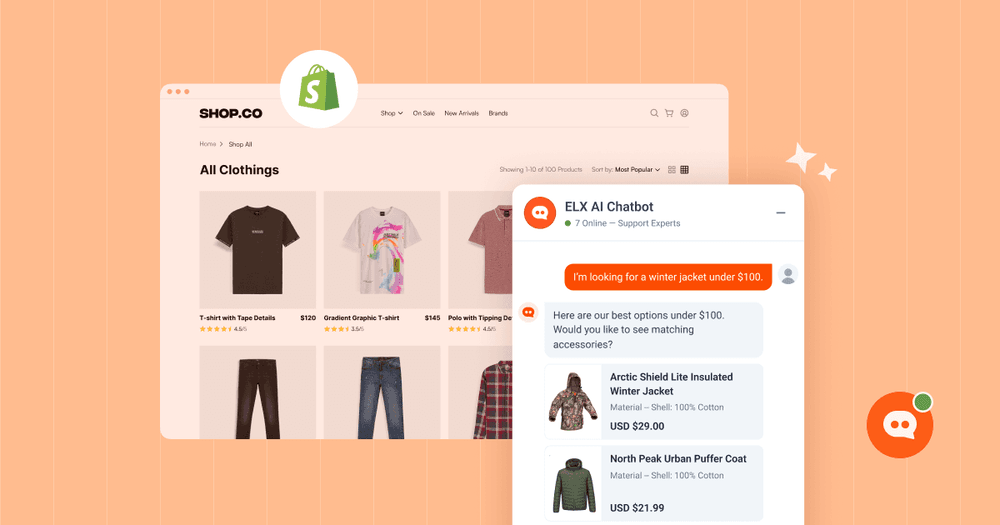
“I need a waterproof winter jacket under £150.”
The AI assistant should be able to:
- Understand intent
- Ask follow-up questions
- Narrow recommendations
- Explain product differences
This creates a more conversational shopping experience.
Step 5: Customise the Chatbot Experience
Brand consistency is important.
Most ecommerce AI platforms allow businesses to customise:
- Chatbot colours
- Icons
- Welcome messages
- Tone of voice
- Conversation style
This helps the chatbot feel like a natural extension of the Shopify store rather than a separate tool.
Step 6: Enable Human Handover
AI automation is highly valuable, but human support still matters.
The best ecommerce AI systems allow support teams to:
- Monitor live conversations
- Take over chats when needed
- Assist with complex situations
- Intervene during escalations
This creates a seamless customer experience between AI and human support.
Step 7: Monitor Analytics and Customer Behaviour
AI chatbots generate valuable customer insights.
Businesses can track:
- Common customer questions
- Support trends
- Product interest
- Conversion behaviour
- Abandoned cart triggers
- Customer frustrations
These insights can help improve:
- Product pages
- Support content
- Conversion optimisation
- Ecommerce strategy overall
Why Conversational Commerce Is Growing
Traditional ecommerce experiences often rely on customers navigating websites manually.
Conversational commerce changes this completely.
Customers can now:
- Ask questions naturally
- Receive instant guidance
- Discover products conversationally
- Complete purchases more confidently
This creates a more interactive shopping experience that feels closer to in-store assistance.
AI Chatbots Help Shopify Stores Increase Conversions
One of the biggest reasons Shopify brands adopt AI assistants is conversion optimisation.
AI chatbots help improve conversions by:
- Reducing customer hesitation
- Answering objections instantly
- Simplifying product discovery
- Improving support accessibility
- Keeping customers engaged during checkout
The result is often:
- Fewer abandoned carts
- Higher customer confidence
- Stronger customer experience
- Improved sales performance
Multilingual AI Support Helps International Growth
International ecommerce expansion often creates customer support challenges.
AI chatbots can help by:
- Detecting customer languages automatically
- Communicating naturally across regions
- Maintaining support availability globally
This allows Shopify stores to support international customers more efficiently without dramatically increasing support team size.
AI Chatbots Are Becoming Ecommerce Sales Assistants
The role of AI in ecommerce is evolving rapidly.
Modern ecommerce AI assistants are becoming:
- Shopping advisors
- Product recommendation engines
- Customer support systems
- Conversion optimisation tools
- AI sales assistants
The line between support and sales is increasingly disappearing.
What Shopify Brands Should Prioritise in 2026
As conversational AI continues to evolve, Shopify brands should focus on solutions that:
- Integrate deeply with ecommerce platforms
- Understand products intelligently
- Personalise customer experiences
- Automate repetitive support tasks
- Improve shopping journeys
- Support multilingual conversations
- Provide actionable analytics
The goal is no longer just automating support.
The goal is improving the entire customer experience.
Final Thoughts
Adding an AI chatbot to a Shopify store is becoming one of the most effective ways to improve ecommerce customer experience in 2026.
Modern AI assistants help brands:
- Automate support
- Personalise shopping
- Improve product discovery
- Reduce cart abandonment
- Increase conversions
- Scale customer engagement more efficiently
As ecommerce competition continues to increase, conversational AI is rapidly becoming an expected part of the online shopping experience rather than a future innovation.
For Shopify brands looking to improve customer journeys and operational efficiency, AI-powered ecommerce assistants are quickly becoming essential tools for growth.
More Blogs
Explore more insights, tips, and stories from our team.